
WCMH PREPARED FOR COVID-19
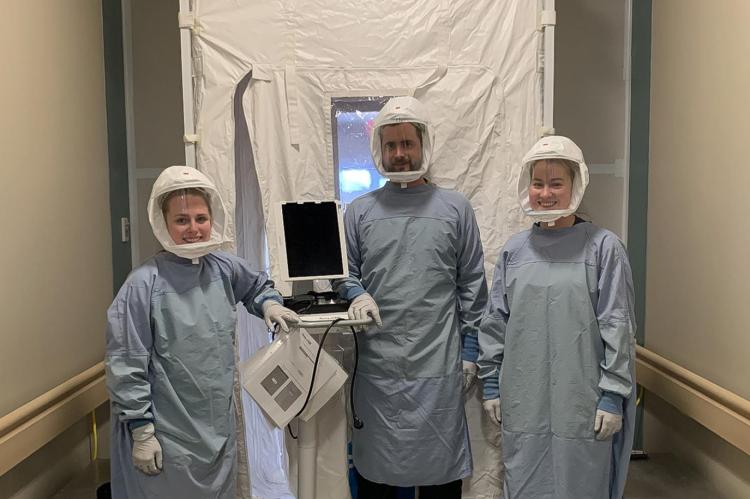
As the United States continues to prepare for the ongoing COVID-19 pandemic, Wagner Community Memorial Hospital (WCMH) prepares for a surge in cases in southern Charles Mix County.
WCMH has been busy getting systems in place to keep patients with possible COVID-19 out of the hospital’s main emergency department as they are proactive in preparing for the surge of patients in the community. According to the latest report from Centers for Disease Control and Prevention (CDC), a report from the South Dakota Department of Health on Monday, March 30, showed that Charles Mix County has one confirmed case of COVID-19.
While the number of COVID-19 cases in the United States rises, WCMH is preparing for the worst case scenarios. As of April 6th, twenty-two patients with COVID-19 symptoms have been tested at the hospital, with two resulting positive, eighteen resulting negative and two pending. In order to be tested, a patient must fall within the Tier 1 criteria because of limited test kits available.
“The criteria first and foremost is on patients with underlying medical conditions, hospitalized or in communal living such as a long term care facility. The next layer of concern is for our healthcare workers who may have direct exposure,” commented Bryan Slaba, CEO of WCMH.
Providers at this time don’t know how to treat Corona virus, so therefore they treat the symptoms. Having symptoms alone will not qualify a patient to be tested. There are guidelines, listed above, in place and all criteria must be met. “If you think you have it, stay home for two weeks, that is the best way to ethically flatten the curve,” Slaba added. “The community needs to understand that yes, you can come into the ER and run through the process, but the test will probably not be given to you. And even if you are tested and it comes back positive and you don’t require medical attention, you will be instructed to go home and self isolate.”
It is important for the public to understand that COVID-19 cases range from very mild, including some with no reported symptoms, to severe. While the majority of cases are mild, there are cases that have resulted in death. Older people or people of all ages with underlying health conditions such as heart disease, lung disease or diabetes, seem to be at a higher risk of developing serious illness. Social distancing is very important to limit the surge of cases and protect the most vulnerable persons in our population. Please follow the recommendations set by local, state and federal government.
Providers at WCMH and other clinics are now seeing patients virtually via telehealth technology to encourage people to stay home and limit exposure.
In preparation of the possibility of limited supplies, Brittany Barron, RN, VP for Patient Care Services jumped into action and broke out WCMH’s supply of Powered Air Purifying Respirator (PAPR) a partial hazmat suits with filters that pump air into a mask so that caregivers will have clean air drawn through. The use of these reusable and sanitizable Personal Protection Equipment allowed WCMH to conserve on the disposable masks which are in extreme short supply. On March 10th, WCMH initiated it’s previously established disaster plan, from the H1N1 pandemic in 2010. “Brittany was proactive in obtaining necessary supplies in the event of a COVID-19 surge,” Slaba said. “Our staff is amazing.” They have remained calm and professional. There are daily meetings with staff, the nurses, department heads and direct care staff which Mr. Slaba and Ms. Barron both attend. Daily meetings are also held with Avera or the South Dakota Department of Health. They prepare for the worst so as to protect the community.
Hospital staff has been busy over the last few weeks creating a virus/bio-containment unit. Two negative pressure rooms were created to equip them to control this type of virus. A wing of the hospital was sectioned off, a temporary wall erected and dedicated to support COVID-19 patients with severe symptoms needing hospitalization.
The hospital is currently set up to handle 20 patients in the isolation unit with 20 cots available if needed. “We have incredible health care providers. They have all really stepped up in facing this challenging medical situation. We couldn’t be prouder of them,” Slaba said. “Because of our pre-planning and ability to react, we were able to get in front of some of this and have supplies on hand and are prepared”
One of the process changes is if someone walks into the hospital there is signage and questionnaires asking about their symptoms and exposure to COVID-19. If the patient is suspected of potentially having the virus, they will be moved to an isolation area where staff donning PAPRs and other PPE would provide clinical assessment and care. If a test is completed, there is approximately a 36 hour return time for the results. If a COVID-19 patient is generally well, they will be isolated at home. If they require hospitalization, they would be admitted to an airborne infection isolation room with trained staff.
When a patient enters through the ER department, they will be asked a series of questions about their symptoms and exposure to COVID-19. If they are suspected of potentially being infected, the patient will be given a kit with a bottle of water, hand sanitizer and a thermometer. A provider will then enter in PAPR suit and transfer them to a negative air pressure isolation room for an exam, lab work and x-ray if required.
“The staff is willing and waiting,” said Slaba. “They’re here to take care of the community. I couldn’t be more proud of them. We are so much more prepared that many small hospitals. When the call went out for extra staff they were there and ready.”
Other services continue with safety measures in place, including physical therapy, chemotherapy and baby wellness checks. Babies need their immunizations so they don’t become vulnerable. Some elective services are being canceled such as colonoscopies, orthopedic visits, mammograms and etc., to conserve protective equipment such as gowns and masks and to limit exposure.
Those visiting hospitalized patients will also see changes. has been put in place, with only Limitations on family coming in one person from the family being allowed, while potential COVID-19 patients are not allowed any visitation this in an effort to best protect the patients and staff. Visitors are not allowed in SD long-term care centers because this population is at most risk of serious illness due to COVID-19.
“I encourage staff to protect and let’s do our job,” said Slaba. themselves, protect their family “I am so proud of the team around here, the way they have stepped is raising their hands. They are up. No matter what it is, everyone willing to come in and take care of the community.”
Slaba also encouraged that if you are looking for information, don’t turn to social media! Instead look at information provided from the South Dakota Department of Health and CDC.
“This hospital will take care of our community members the best we can with what we have! We are poised and we are ready,” Slaba added.
Here’s how you can protect yourself and your loved ones from COVID-19:
• Avoid close contact with people who are sick.
• Cover your cough or sneeze with a tissue, then throw the tissue in the trash.
• Avoid touching your eyes, nose and mouth.
• Clean and disinfect frequently touched objects and surfaces.
• Stay home when you are sick, except to get medical care.
• If you are sick, limit close contact with others as much as possible.
• Wash your hands often with soap and water for at least 20 seconds. If soap and water are not available, use an alcohol-based hand sanitizer with at least 60% alcohol.
• Practice social distancing by avoiding crowds and limiting physical contact, i.e., shaking hands or hugging.