WAGNER/DANTE "OPPORTUNITY ZONE"
As a result of the Tax Cuts and Jobs Act of 2017 (the Act), Census Tract 46023940300, which covers eastern Charles Mix County and includes Wagner and Dante, was designated an “Opportunity Zone.” According to the Economic Innovation Group (EIG) in Washington, D.C., this new economic development tool “connects private capital with low-income communities across America” and allows certain tax incentives designed to encourage investment in the zone.
The Act allowed Governor Daugaard to nominate up to 25 tracts. South Dakota has 143 low- and moderate-income census tracts. And, eighteen communities are within the 25 tracts recommended by Governor Daugaard, which were then certified by the IRS during the spring of 2018.
Opportunity Zones allow investors to defer taxes by rolling capital gain, like from the sale of an investment, into designated Opportunity Funds. An Opportunity Fund is a new investment vehicle (i.e. a newly organized partnership or corporate entity) that invests in a project(s) within the Opportunity Zone. The longer an investor keeps the investment in the fund, the more benefits they and the community they invest in will receive.
Amanda Bechen CPA says, “I see loads of economic potential for the Wagner-area with benefits to certain taxpayers, especially whereby an eligible taxpayer “self-certifies” the Opportunity Fund they create.”
The three primary tax benefits include:
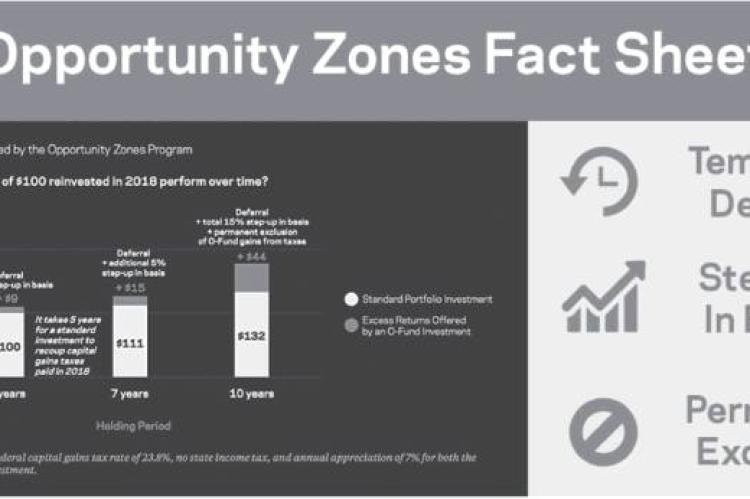
1. Temporary deferral. Initially, investors defer taxation of their capital gains by reinvesting into an Opportunity Fund. This capital gains tax deferral results in significant time value of money benefits.
2. Step-up in basis. Capital gains taxes decrease as the holding period increases. After five years, investors receive a 10 percent basis step-up. After seven years, investors receive an additional 5 percent basis step-up. If not sold sooner, taxes on 85 percent of the invested gains will be due on December 31, 2026.
3. Permanent exclusion. If the fund is held for at least 10 years, no capital gains tax will be due on any appreciation beyond the original investment.
Wagner Area Growth is looking to Opportunity Zone incentives to potentially fill financing gaps. “If this program were around when we were planning a 6-unit housing development back 2015, the project would have gone through. Our risk would have been lower and it would have been more feasible. I plan to take another look at that project now that this tool is available,” says Kelsey Doom, Director of Economic Development for Wagner Area Growth.
Source: eig.org/opportunity-zones/resources