WAGNER HOSPITAL HOSTS HANDS-ON TRAUMA TRAINING
WAGNER HOSPITAL HOSTS HANDS-ON TRAUMA TRAINING
Barb Pechous
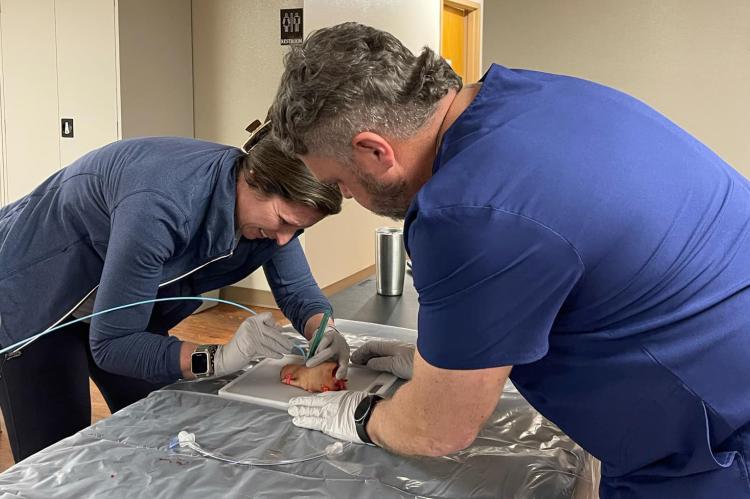
Wagner Community Memorial Hospital (WCMH) held a high-impact, handson trauma training session designed to sharpen critical emergency procedures for frontline providers in the Emergency Department (ED). Spearheaded by Jarod Myer, CNP, assistant trauma director and ED provider at WCMH, the session delivered realistic, procedure-based education aimed at improving response and comfortability in high-stakes trauma situations. With 128 trauma visits reported in the emergency department in 2024, the hospital recognizes the necessity of keeping staff prepared for critical patient encounters. While all full-time ED providers maintain Advanced Trauma Life Support (ATLS) certification, this internal training initiative was developed to build on that foundation with repeat practice and exposure to rarely performed, but essential, procedures. “This training was entirely created by our providers, for our providers,” said a hospital representative. “We want to remain current with evolving best practices and feel confident in every procedure we perform—especially in trauma scenarios where seconds matter.” A total of ten participants attended the session, including six nurse practitioners, one physician, a paramedic, a paramedic student, and a medical student. The training focused on a wide range of trauma topics, including: trauma workups and updated guidelines, intubation techniques and medication use, ventilator management training for newly acquired equipment, handson practice with cricothyroidotomies and chest tube placements In a unique and innovative approach, Jarod Myer sourced pig tracheas, ribs, and skin from local meat lockers to create realistic procedure models. These organic models allowed participants to simulate life-saving interventions, such as airway management and chest decompressions, in a controlled and practical environment. “Pig tracheas closely mimic human airways, making them ideal for training cricothyroidotomy procedures,” explained Myer. “Similarly, pork ribs offer a realistic feel for chest tube placements. It’s one thing to read about a procedure, and another to physically go through the motions.” Each participant had multiple opportunities to practice using the tools and techniques required for these high-level interventions, significantly boosting confidence and proficiency across the board. Looking ahead, WCMH continues its commitment to hands-on education. On April 29, the hospital will host the SIMSD truck, providing simulation-based burn management education using advanced mannequins. This training will include both providers and nursing staff from the Emergency Department. The hospital values continuous learning and bringing training directly to the facility allows the teams to collaborate, use familiar equipment, and grow together in a way that’s both efficient and incredibly effective.