
WAGNER COMMUNITY SCHOOL PARTICIPATES IN THE 2024 OCEAN DAKOTAS INSTITUTE LOCATED ALONG NEW ENGLAND COASTLINE
WAGNER COMMUNITY SCHOOL PARTICIPATES IN THE 2024 OCEAN DAKOTAS INSTITUTE LOCATED ALONG NEW ENGLAND COASTLINE
Dr. Carrie Tucek
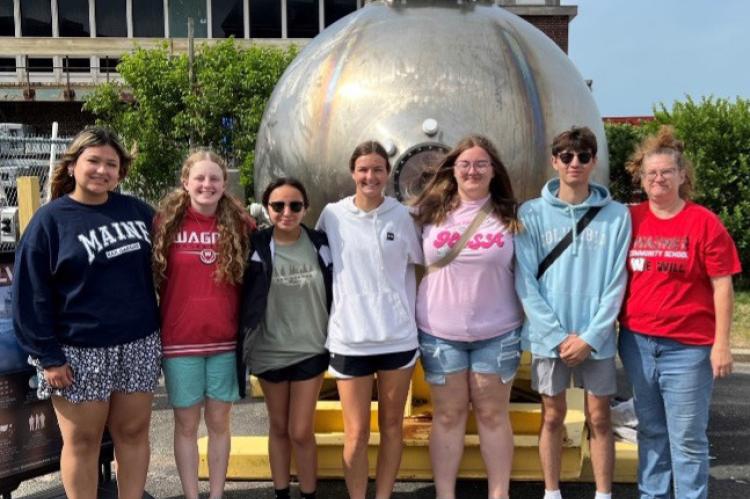
Six Wagner students along with 14 teachers from across SD and ND participated in the 2024 Ocean Dakotas Institute along the New England Atlantic Coast in June. It was sponsored by the Wagner Community School through NOAA Ocean Exploration and run by Spencer Cody of the Edmunds County School district in SD. The institution focuses on educating students and teachers about ocean life and, most importantly, job opportunities involving marine science.
We visited Woods Hole Massachusetts, which is a center for world-class ocean research. On a research vessel, we assisted in a launch of a dredge to bring up specimens that we had seen on a camera array that we previously launched. We collected sea urchins, crabs, star fish and large snails that we later took to the laboratory to examine under a camera.
Wagner students were able to examine specimens they dredged off the ocean floor.
Woods Hole also gave us the opportunity to visit the WHOI’s AVAST innovation lab where people in many different fields and different degrees come together to collaborate on creating new forms of technology to advance marine science and an understanding of the ocean. We also visited the NOAA aquarium, which is one of the oldest aquariums in the country. This aquarium gives a behind the scenes look at aquarium operations and houses over 80 different species of animals found in the Northeast and Mid-Atlantic US waters.
We had a rare opportunity to tour the Marine Biological Lab (MBL) in Woods Hole. (https:// www.mbl.edu/) The facility has sea water pumped in from the ocean to supply their animals with the best natural environment. Some research includes the phenomenon on regeneration of star fish and intelligence of cephalopods. The lab’s veterinarian explained how the species they raise assists researchers across the country in the hopes of making discoveries for our medical benefit.
We stayed at the Schoodic Research Institute in Acadia Park located in Maine for three days. We visited Frazer Point and Schoodic Point where we went tide pooling to find eels, crabs, lobsters, anemones, sea urchins, and barnacles. We also observed low and high tides at different times of the day at these locations.
Wagner students were able to compare low and high tides at different times of the day at the tide pools.
One of the highlights of the trip was the visit to Acadia National Park. The stunning landscape and natural resources of Acadia have attracted people for more than 10,000 years, beginning with the Wabanaki people, and have fostered an ongoing interconnectedness between people and the landscape. We went on trails, visited a natural flower garden, and spent time at Sand Beach.
With the location of the furthest distance to an ocean in our country located in SD, it is important for SD teachers and our students to realize the amazing job opportunities and life experiences that our coastlines have to offer. Ocean Dakotas is committed to making these realizations come true.