
1 minute
THIRD GRADERS EXPERIMENT WITH BEAKS/BLUBBER
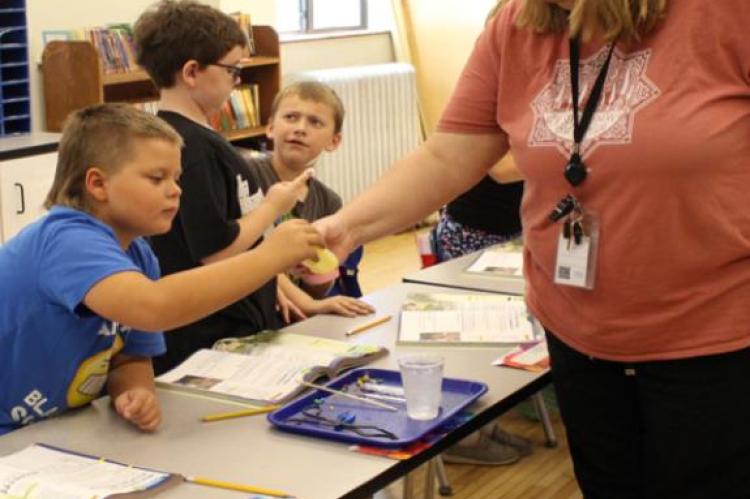
On September 22, the third grade class put their science skills to the test. They did an experiment on animal adaptations. The lesson for this experiment was about how plants have specific abilities to adapt to what is around them. Animals also have different body parts to aid in this adaptation.
The students described their experiment as learning how different birds have different beaks to live in their environment. They used chopsticks and tweezers as beaks for the birds. From this, they learned that it is harder to pick up different items with different beak replicating tools. Colt Wolf learned, “That the all birds have different beaks. [We] see what kinds of foods birds eat. When we were seeing how hard it is for the eagle and the cardinal were hard to fit thourgh the rocks close together but the hummingbird could fit through the close rocks.”
From learning about the birds, they moved onto a lesson on cold weather animals. The students used vaseline to represent blubber in their lesson. To take on the characteristics of a seal, they dipped their fingers in the ‘blubber,’ and then put their fingers into ice cold water. Nicholas Schryvers said, “It felt like my finger was numb after I put my finger in the water. But it was a nice numb not a bad numb.” From this, the students learned how the seals' blubber can keep them warm in such cold temperatures. Many of the students stated that their favorite part was dipping their fingers in the blubber and realizing that their fingers stayed warm in the cold water.