

SPRINGFIELD COLLEGE MUSEUM UPDATES UNDERWAY
SPRINGFIELD COLLEGE MUSEUM UPDATES UNDERWAY
Submitted By Lawrence Namminga
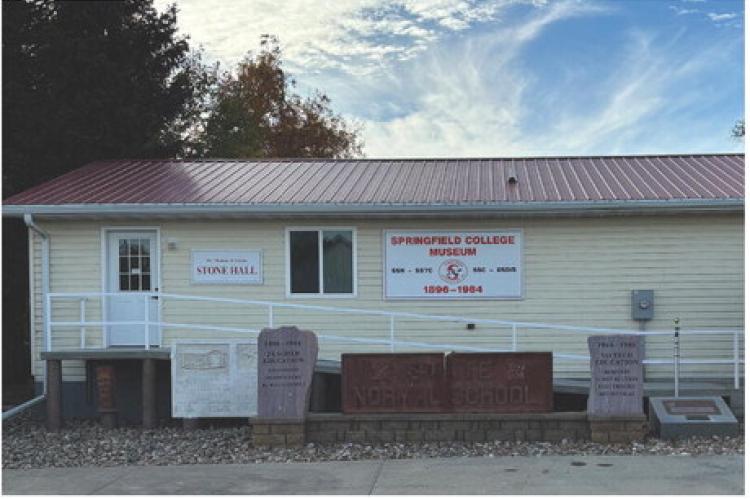
The Springfield College Museum committee knew that the wooden ramp and steps in front of the museum needed to be repaired or replaced. When the ramp was checked out, it was determined that there was more to repair than what was first anticipated. In their October meeting, the committee decided that the best approach would be to replace the stairs and ramp and that the best long-term plan was to replace the wooden ramp with a cement ramp. In addition to that project, there were several important museum pieces that we wanted to show that were once part of Main Hall and the Veterans Plaza. Leonard Magee sketched a design that the committee agreed would be a great way to show those particular artifacts. The committee contacted alumnus Terry Schultz of Avon to see if he would be interested in completing the project. Terry and his son Nathan agreed to take on the project and so the project was underway. Terry and Nathan are to be commended as they worked hard for the past two weeks to get it completed. The items that have been displayed at the front of museum are: 1. A Granite, Veterans Memorial plaque that was originally located on the beautiful Veteran’s Memorial plaza that was located in the middle of the college campus. (There was also a smaller bronze plaque that showed that Springfield American Legion, Dwight Wood Post moved the granite plaque to a location by the Springfield Post Office.) 2. A sandstone head that was the keystone over the southwest door of Main Hall. 3. A white marble plaque that on the left side shows the first school house in the Territory of Dakota that was located at the village of Bon Homme. On the right side of the plaque is the name of the teacher and students. It also has the inscription, “From the First School to the Springfield Normal”. This marble plaque was displayed in Main Hall inside the southeast door. 4. The last items that were moved and re-utilized were the polished marble pillars that were outside the entry to the southeast entrance door to Main Hall. Those items were cut and resized to be used as supports for the concrete ramp. Overall, the committee feels this was a great way to display several items that have not been used and show part of the history of the Springfield College.