
SERVICE-LEARNING CLASS
SERVICE-LEARNING CLASS
Megan Fischer
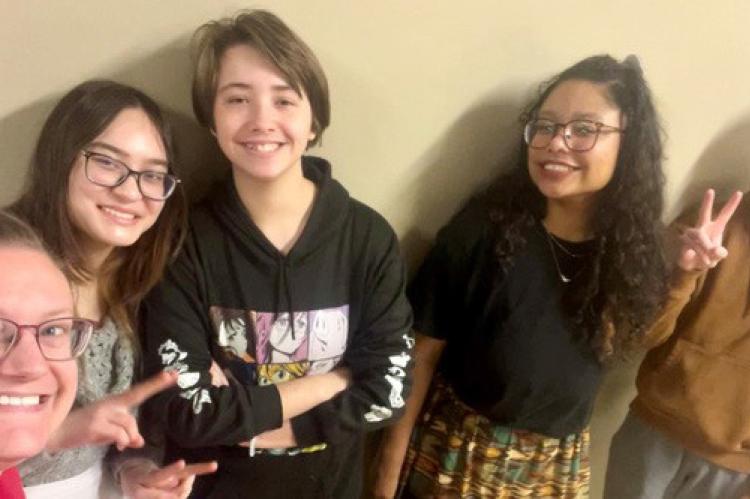
Service Learning is a method of learning that incorporates research, action, and reflection. To provide additional electives and provide opportunities for juniors and seniors to connect to their community and surrounding areas, the pilot course began in January. In other words, students who took the new course this spring researched needs within the community. From that research, they identified a topic with which they were most interested, partnered with a community member and created a plan to help their community. Each student created a schedule for the project unique to their talents and interests. Each community partner was someone able to support the student’s project idea because of the community partner’s interests and expertise. As the classroom facilitator, I would like to thank every person and/ or business that showed interest in supporting our students as community partners. The students put in many hours of work, and I enjoyed watching their ideas bloom with their selected community partner’s guidance. Sphynx Foster, after researching, found the area had a high need for mental health resources. She was able to contact the Helpline Center and obtained promotional materials to pass out at the school play. She distributed materials that promoted area resources for anyone struggling with mental health issues. She has partnered with Ericka Kotab, a school psychologist, as her community partner to provide guidance.
James Greger focused on mental health and the arts. He wanted to provide a positive mental health outlet for middle school students who were interested in art. James partnered with JoMarie Garcia, the director of the Ihanktonwan Tribal Opioid Response Grant funded by SAMHSA, to provide a weekly art group that focuses on preparing the 6-8th grade participants with the tools necessary to navigate mental health struggles within themselves or to help those around them.
James plans to continue to work with JoMarie and the TOR grant after graduation.
Isabella Hull job shadowed Kristina Monroe at the South Dakota Game Fish & Parks at North Point. She had identified caring for the environment as her topic of interest and had initially thought cleaning up trash was the main way to care for the environment. Her idea of caring for the environment has expanded exponentially due to her time with the GFP. She was able to see multiple ways to care for the environment up close including caring for the native flora and fauna, maintaining a balance between the natural environment and the human impact, and teaching the next generation.
Treyson Zephier envisioned piloting a mentoring program for all ages. He felt inclined to ensure that anyone who needed a leader and a listening ear would have a mentor. Through the research process, he overcame many obstacles. Through conversations with administration, Treyson and I discovered that the responsibility of the mentor program was not easily transferred between staff. We realized that he could format a mentorship manual, so that the direction of the mentoring program within the school would be easily transferable. This presents the mentoring program with a sense of stability and consistency which ensures the mentoring program will continue.
As with anything new, I did not know what to expect. I am so immensely proud of our service-learning students, the service, and reflections that they have been doing the last few months. I am beyond excited with the connections that were made within the community this semester. I look forward to our Service-Learning class next spring as we continue to build our base of community partners. We apppreciate your support!