

ROUSE HONORED AS JUNE VETERAN OF THE MONTH
ROUSE HONORED AS JUNE VETERAN OF THE MONTH
Alyssa Mathis
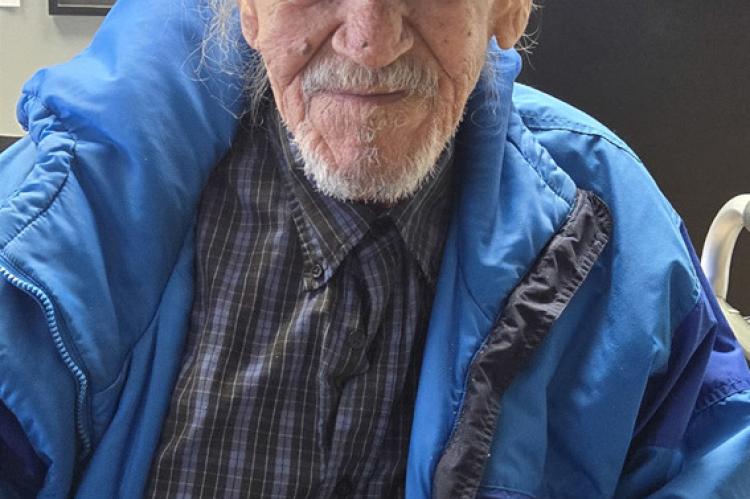
Earnest Rouse enlisted in the Army in 1951 at the age of 16 with the signature of his mother. Rouse had two older brothers who were already paratroopers in the Army and Rouse wanted to continue the family legacy even if he was not quite of age yet to enlist himself. He is a Veteran of the Korean and Vietnam Wars.
Rouse was sent to Fort Breckinridge in KY for basic training. After basic training, Rouse stayed in Breckinridge to receive his training as a rifleman. He and three others were pulled before finishing rifleman training. He was an expert in M2 Carbine being able to hit 14 our 15 rounds in the bullseye of a target. Rouse then attended special training at Fort Benning (now Fort Moore) in GA. While there, he was trained as a paratrooper before being sent to Korea to engage in combat.
Rouse spent two years in combat zones in Korea. He traveled extensively throughout the Korean doing covert operations. He was a part of a 15-man combat team that would do night raids on guerilla soldiers. The combat teams were put together by General Matthew B. Ridgway who was the supreme commander of the United Nations forces in Korea and supreme commander of the United States Far East Command.
Because of his covert operations status, Rouse was not really discharged when his service ended in 1954. In 1958 and 1959, he was again called up to continue his work in covert operations only this time in Vietnam. He can remember being flighted from Okinawa, Japan to the rice fields in Vietnam and the rice fields smelling like coal dust.
Joining the Army and going to Kentucky and Korea was the first time that Rouse had been out of the Midwest. Rouse comes from a military family. His father was a combat Veteran of WWI who passed away from tuberculosis when he was only 50 years old. Both Rouse’s brothers and he were sent to Korea at the same time. His mother had to be a strong woman to send all three of her sons at once to fight in a foreign country. Not once did Rouse’s mother question Earnest about his decision to join the Army or talk about how sending all three of her boys to Korea made her feel. She knew that it was something that he both wanted and needed to do.
For his service in Korea and Vietnam, Rouse was awarded two Bronze Stars. The Bronze Star Medal is awarded to members of the United States Armed Forces for either heroic achievement, heroic service, meritorious achievement, or meritorious service in a combat zone.
Unfortunately for Rouse, this is where his memories of his military career end. After ending his military service, Rouse suffered from post-traumatic stress disorder (PTSD). PTSD is defined as a disorder where a person finds it difficult to recover after experiencing or witnessing a terrifying or life-threatening event. When asked about the highlights of his military service, Rouse said that there were not any. After losing a good friend during combat in Korea, it made Rouse scared to make friends. He did not want to have to say goodbye to anyone else that he got close to during his service.
PTSD affected Rouse for the rest of his life. It was very hard for him to stabilize himself. He never married or had children. Rouse did many different jobs, never really settling on a career. When asked what his interests or hobbies were, he said that he did not have any.
Earnest enjoys talking about and telling his military experiences, those that he can remember. Even at 89 years old, he is still living with and trying to navigate through his PTSD. One thing that he would like to say to high school seniors who are contemplating joining the military is to talk to those that have served and hear their experiences that way they can make a well-informed decision as to whether it is for them or not.
As June is the annual PTSD Awareness Month, Rouse’s story is a prime example of what some of our soldiers’ experience after their tours of duty and being discharged from service. This is a month that is observed to spread awareness and information about PTSD. I personally want to thank Mr. Earnest Rouse for not only his service, but for being so candid about such an underdiscussed topic especially when it comes to our military men and women’s experiences.