

PRESERVE AND PROSPER COMMUNITY GROUP DEBUT
PRESERVE AND PROSPER COMMUNITY GROUP DEBUT
Alyssa Mathis News@hcinet.net
According to the Cambridge Dictionary, to preserve means to keep something as it is, especially in order to prevent it from decaying or being damaged/destroyed. Prosper as defined by Merriam-Webster, means to succeed in an enterprise or activity; especially: to achieve economic success to become strong and flourish. No this is not a vocabulary lesson, but these two important terms are the inspiration for the Preserve and Prosper community group that has recently formed. Preserve and Prosper was founded to help the communities of Lake Andes, Wagner and Marty with the desire and necessity to assist with food security. As prices are constantly rising in almost every aspect of people’s lives, it is taking a toll on people’s wallets and causing worry when it comes to food bills and grocery shopping.
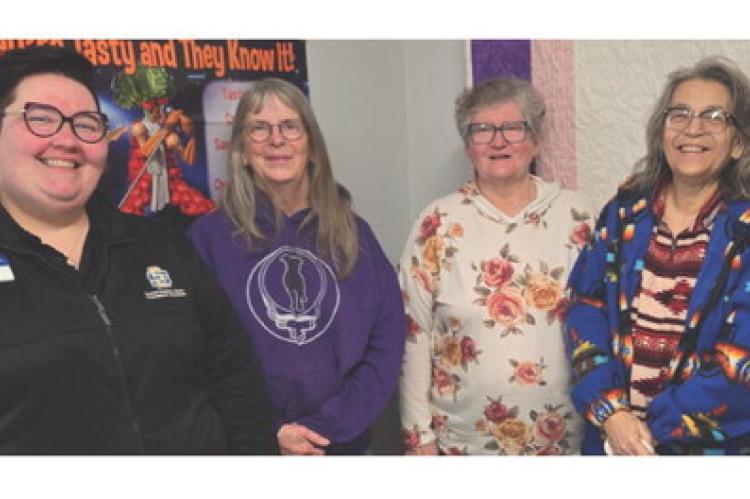
This is where Preserve and Prosper come into play. With prices rising, people are looking to can, freeze, and dehydrate food along with growing their own produce and raising their own chickens. Not everyone has access to the resources or knowledge that is needed to be successful in these different areas. Luckily, there is a council of very experienced women (as of right now) that all specialize in different areas. Founding members of the organization are Mary Jo Parker, Leah Antelope, Rebecca Beeson, Jacque Johnson and Shelly Saunsoci. Mary Jo’s specialty will be gardening; Leah’s will be gardening and food preservation. Nutrition and resources will be Becky’s specialties; Jacque’s specialties will be raising chickens, growing herbs and organic gardening. Shelly’s specialties will be making connections, community involvement, resources etc.
Not only does this core group of ladies bring great knowledge and experience, but many of them work for different agencies that are geared towards helping our communities. Different entities represented within the group are Lake Andes Community Library, Lake Andes Food & Wellness Council, SDSU Extension, ROCS, LSS/OARN, and the Yankton Sioux Tribe. Besides the core group of five there are a total of eleven group members as of now.
As this is a newly formed group, they are still working on what exactly they hope to be able to offer in the future. There will be two open houses held before the end of March. The first one will be in Lake Andes on Tuesday, March 25th at 6 p.m. until 7:30 p.m. at the Lake Andes Community Center. The second meeting will be in Wagner on Tuesday, April 1st from 6 p.m. until 7:30 p.m. at the Tribal Hall. These open houses will be a great time for the group to get feedback on what kinds of topics community members would like to learn more about when it comes to food security along with how much time people are wanting/willing to put in to learn these techniques and information. The open houses will also have door prizes and there will be a hands-on seed starting activity. The open house is open to all ages.
There are a variety of classes that can be offered depending on the interest of the different communities. These classes will be offered at no charge and are open to any adults and children 12 years of age and older. Classes that could be offered include container gardening; canning pickles; making homemade salsa; seed starting; the ins and outs of food preservation including freezing, canning, dehydrating; how to stretch a food budget and or create a food budget; basic cooking skills; how to make a grocery list; nutrition classes, etc. These classes will be unique as they will be local people teaching local people, sharing their knowledge and years of experience. Not only is this a great way to learn new skills, but it also allows community members to build relationships with one another creating a strong community bond.
What the group is hoping for as they begin their journey is to have a community garden in each community similar to the one that Lake Andes has annually. From there the group wants to tailor the classes to the differing wants and needs of each community. These ladies are passionate about what they do and have a calling to create opportunities for those community members that want to learn how to create their own sense of food security.