

OUR LIVING NEW DEAL
OUR LIVING NEW DEAL
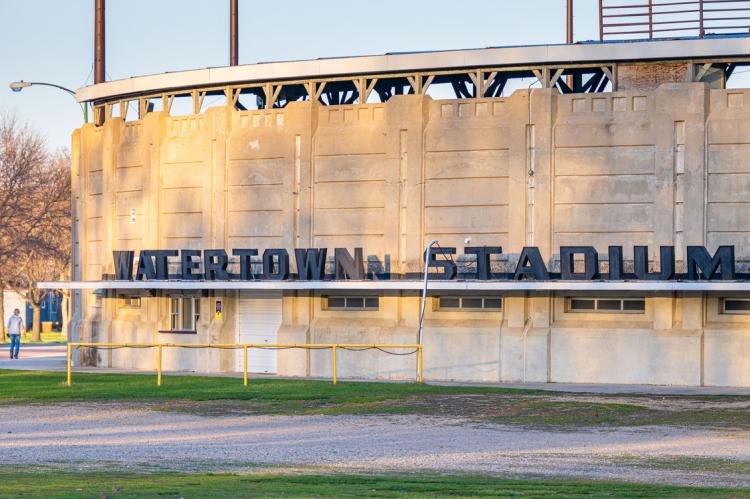
Many years ago I went to an amateur baseball game at Watertown Stadium. It was my first time there, but it didn’t take long to sense that the place held some historical significance. I didn’t know it then, but the stadium is part of the lasting legacy of President Franklin Roosevelt’s New Deal, the initiative launched to pull the country out of the Great Depression of the 1930s.
The New Deal created an alphabet soup of federal agencies, including PWA (Public Works Administration), CCC (Civilian Conservation Corps) and WPA (Works Progress Administration). Young men in South Dakota worked on a variety of projects, many of which no longer exist. But, 90 years after the New Deal began to reshape America, several of them remain as important parts of our lives.
A $65,000 WPA grant helped build Watertown Stadium in 1940. The concrete art deco stadium on Kemp Avenue included a field for football and baseball, a running track and seating for 5,000 Watertown Arrows fans. The stadium has also hosted two professional baseball teams — the Watertown Lake Sox, who played in the Basin League from 1954 to 1962, and the Watertown Expos, a minor league affiliate of the Montreal Expos, from 1970 to 1971.
Laborers from the WPA also helped build O’Harra Stadium on the South Dakota School of Mines and Technology campus in Rapid City. One of the few “drive in” college football stadiums in the country, the field is surrounded on three sides by a natural horseshoe bowl with three terraces graded into the banks allowing spaces for 350 vehicles to park and watch the action.
Ralph Herseth was 26 years old when he led CCC workers in building Sand Lake National Wildlife Refuge. Crews directed by the future governor constructed dams, dug ditches and planted the uplands to provide food and cover. They moved 120,000 cubic yards of dirt to build eight islands and planted thousands of trees and shrubs. The men also built a 108-foot-tall steel observation tower that visitors can still climb.
The South Dakota Artists Project hired Oscar Howe, the renowned Yanktonai painter from the Crow Creek Reservation, to create 10 murals inside Mobridge’s Scherr-Howe Event Center. The five murals on the old auditorium’s south wall depict the “Ceremonies of the Sioux,” while five on the north side portray “History along the Missouri River.” Several courthouses and post offices feature similar murals by artists hired through New Deal art programs.
A website called livingnewdeal. org has documented more than 17,000 other sites like these across the country, including 124 in South Dakota, though as we wrote a story about them for our July/ August 2023 issue, we discovered there are many that have not been included yet. The New Deal helped countless families survive one of the most challenging eras in the nation’s history by putting men and women to work. Whether they built, wrote or painted, it's a gift to us that we can still enjoy the fruits of their labors.
John Andrews is the editor of South Dakota Magazine, a bi-monthly publication that explores the people and places of our great state. For more information, visit www.southdakotamagazine. com.