

JUDGE MICHAEL E. RIDGWAY RETIRES AFTER 12 YEARS
JUDGE MICHAEL E. RIDGWAY RETIRES AFTER 12 YEARS
Barb Pechous
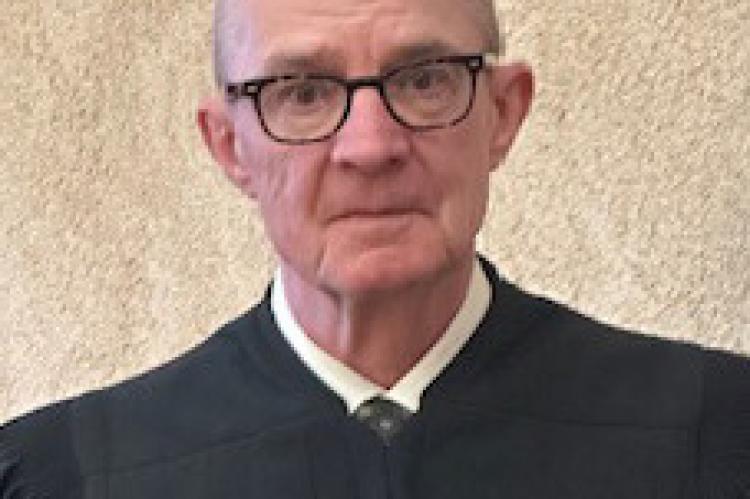
After more than a decade of service as a U.S. Bankruptcy Judge, Michael E. Ridgway is officially retiring—and leaving behind a legacy marked by fairness, respect, and a whole lot of naturalization ceremonies. Ridgway, originally from Ravinia, graduated from Yankton College and Notre Dame Law School and spent 17 years in private practice in Yankton.
Ridgway, who served 12 years on the bankruptcy bench, says the experience made him a more patient and thoughtful person. “I don’t jump to conclusions like I may have before,” he reflected. “Being a judge really taught me to listen more carefully.”
One of the most rewarding parts of his job wasn’t just issuing rulings—it was celebrating milestones with others. “I loved naturalization ceremonies—swearing in new citizens,” Ridgway shared. He estimates he helped welcome between 5,000 and 6,000 new Americans during his time on the bench. “I also enjoyed officiating marriage ceremonies and watching young attorneys grow. It was rewarding to see their arguments and writing improve over time.”
But the job wasn’t without its challenges. He noted that handling cases with pro se litigants— people who represent themselves—could be difficult. “They often weren’t trained or fully capable of representing themselves, and I always made that clear. But for many, the cost of hiring an attorney is just too high,” he said. While he couldn’t offer legal advice, Ridgway always encouraged respect and professionalism in his courtroom. “You can be a strong advocate without tearing down your opponent,” he added. “I tried to set a high bar for courtroom conduct and attorney development.”
When asked how he hopes to be remembered, Ridgway answered without hesitation. “Even if someone didn’t win their case, I hope they walked out feeling like they were heard, that the judgment was fair, and that they truly had their day in court. I also hope I’m remembered as being tough—but fair.”
Throughout his career, Ridgway was shaped by several mentors. He credits the late Yankton attorney John Kabeisman with instilling strong values and helping him become a better person. He also practiced in the courtroom of Bankruptcy Judge Peder Ecker during the era of farm bankruptcies. “His courtroom in Sioux Falls was always packed, but he stayed calm and fair. I’ve always tried to emulate that,” Ridgway said.
When it came to courtroom management, he admired U.S. District Court Judge Lawrence L. Piersol for his strong presence and insistence on proper decorum. “I probably appeared in his courtroom more than anywhere else,” Ridgway said. “I tried to adopt his approach in my own courtroom. I expected attorneys to be on time, prepared, and ready to do business.”
Outside of law, Ridgway has a passion for baseball. He umpired games at the amateur, collegiate, American Legion, and V.F.W. Teener levels, and was inducted into the South Dakota Baseball Umpires Association Hall of Fame in 1996. In 2011, he received the Attorney General’s Distinguished Service Award—the second-highest honor given by the Department of Justice—for his work addressing creditor abuse in bankruptcy cases.
Though he’s stepping away from the bench, Ridgway doesn’t plan to leave the legal world behind completely. He may return to teaching—he previously taught a bankruptcy law course at St. Thomas Law School in Minneapolis—and is even considering writing a book. “Bankruptcy isn’t boring,” he joked. “And I’ve got plenty of stories to prove that. Truth really is stranger than fiction.”