

ICE FISHING FOR PANFISH
ICE FISHING FOR PANFISH
Gary Howey
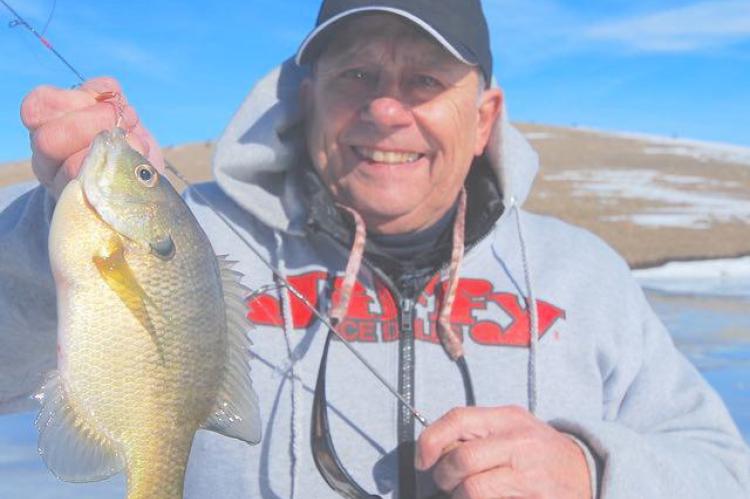
As winter progresses, there are changes going on below the ice, forcing the fish to new locations and as this happens, their behavior changes.
According to John Thelen, a Minnesota guide, and TV host, “he enjoys fishing the mid-winter transition for panfish because the crappies, bluegills and perch make the same moves and stage in the same types of locations, meaning more than likely they’ll typically be in areas together.
The snow covering and thicker ice, reduces light penetration, in causing the shallow water weeds to die.
When the weeds die, oxygen levels drop and it’s the end to early shallow water ice fishing, as the panfish head deeper during this time, he indicated, they don’t head directly to 20-to 30- feet, and often are found in holes or drop off near the location of the weeds that they’d been using.
“They don’t necessarily just swim to the middle of the lake all at once,” Thelen said. “He likes to locate these holes that are just out from good early-ice fishing areas, moving to deeper water, the fish school up more at this time, likely for security, then moving to areas that are more open and lack weedy cover.
The schools will also move more during a day, traveling within a deeper hole, and not hold tight to the weeds edge.
The crappies, tend to move much higher in the water column. Because of these changes, he drills multiple holes in an area, so he can search more horizontally, drilling some over the slopes that drop into the hole and others over the deepest water to provide more searching options. He also watches the entire water column on his electronics and works higher in the water column with his baits when crappies are his primary targets.
Other Midwestern guides indicated that they find panfish in and around, remaining plant growth, stumps, brush and blowdowns. Bluegill will eat anything that moves and a lot of which doesn’t and said that If it fits in their small mouth, they’ll take it.
As the ice season progresses, he likes to bang a Tungsten jig on the bottom attracting bluegills that aren’t aggressive. During the mid-winter transition, the same approach may spook the fish, so he’ll jig very minimally, keeping the jig just off the bottom, or even use a dead stick approach, not adding any movement.
Spoons work well for crappies and he’s found that a spoon tipped with a minnow head helps him catch larger crappies, than he typically does with a jig.
Thelen often starts with a Rattl’n Flyer, switching to a Glow Spoon if, he needs extra glow or sound for more aggressive fish to a Quiver Spoon to slow the fall Thelen has found that the fish are extra spooky this time of year. Along with having just moved to more. open water and often swimming higher in the water column, schooled up fish equate to an entire school of eyes, ears and lateral lines, so when you spook one, it tends to spook to whole school Thelen has found that the fish are extra spooky this time of year. Along with having just moved to more open water and often swimming higher in the water column, schooled up fish equate to an entire school of eyes, ears and lateral lines, so when you spook one, you spook the whole school.
Because of the added wariness of the fish, Thelen rarely fires up his auger to drill additional holes once he starts fishing, unless he is making a big move to a new area. Instead, he invests extra time drilling numerous holes before ever dropping a bait in the water, so he can more stealthily move from hole to hole when he is searching for active fish.
For the same reason, he believes that walking lightly and minimizing unnecessary banging of gear is important.