

HOLLMANN APIARIES CELEBRATES 40 YEARS
HOLLMANN APIARIES CELEBRATES 40 YEARS
Alyssa Mathis
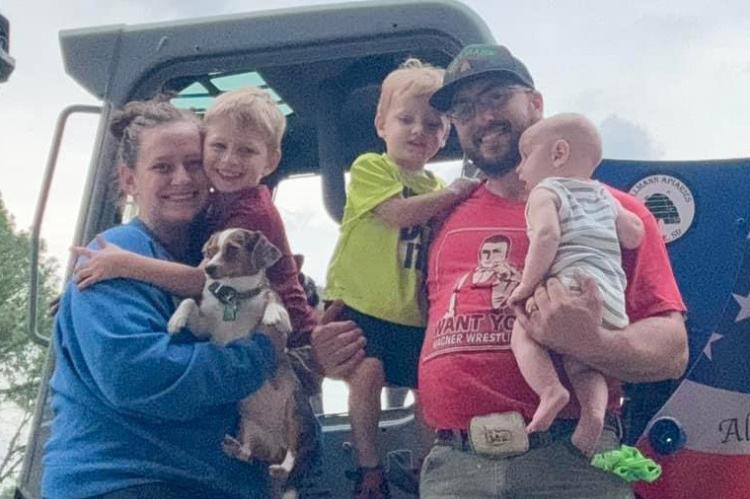
Hollmann Apiaries is a family owned and operated business that began in 1984 by Tim and Michelle Hollmann. Hollmann Apiaries all began when Tim took a summer job working for a beekeeper. He originally thought that the job would help him get stronger and stay in shape for sports, little did he know that that summer job would shape him to create his own business as a beekeeper. After 34 years of running Hollmann Apiaries, Tim and Michelle Hollmann decided to take a step back from the business, making way for a new owner. In 2018, their son, Alex and his wife, Brandy continued the beekeeping legacy when they purchased Hollmann Apiaries. This year marks the 40th anniversary of Hollmann Apiaries where their motto is “Making Life Sweeter Since 1984”.
The role of a beekeeper is very important. Their duties include keeping up the overall health of bees for the production of honey, managing the hives through feeding and re-queening when necessary and aiding in pollination services. Keeping the bees healthy can be a challenge. In the spring and fall the beekeepers give the bees treatments to aid in their fight against nosema/ foul brood, varroa mites, traechia miters and various viruses. The bees are also given supplements and essential oils to help with their gut health and immune systems. Feeding their bee population can be necessary especially in circumstances such as establishing new colonies, when the weather prevents foraging, when colonies have low storage levels of honey and during periods of low nectar flow such as the winter months.
There are several challenges to being a beekeeper, with the first one being just the basic challenge of keeping the bees alive. There are also the challenges of figuring out what is hurting them, protecting them from chemicals, natural disasters, time periods of little to no precipitation, etc. Beekeeping is very similar to farming in the aspect of never quite knowing what is in store and needing to be able to roll with the punches. As there are challenges to beekeeping, there is also the opposite that include the aspects that beekeepers enjoy. For Tim, “It’s not a matter of what I enjoy. It’s what I think is important.” As for Alex, he enjoys all the aspects of being a beekeeper except for the challenges of traveling, since he has a family, but he knows it is a part of the job.
When it comes to finding the perfect spot to place the apiaries, there are a lot of different aspects that the beekeepers look for. They want to make sure that there is enough space for the trucks and forklifts to be able to move the bees around. The area needs to provide the bees with good opportunities to forage whether it be river hills, pastures with wildf lowers, planted crops, etc. Other factors that need to be considered are protection whether it be from the elements such as wind or predators as well as making sure that there is the proper amount of sun exposure.
The breeds of bees that Hollmann Apiaries home are a cross breed between two very popular honey bees, Carniolan and Russian. During the year, the apiaries are inspected less than 10 times by the beekeepers. These inspections happen in March, several times before May, when boxes are put on or off for honey production, in the Fall and finally in the Winter. Each year in March the beekeepers go through and split all of the hives to three or three and a half frames of brood and at this time the brood receives a new queen. The brood is the future population of the beehive that includes eggs, larvae and pupae of the bees. During this time of year, the beekeepers are looking for a good viable queen that they feel will be able to make it through the winter. The Hollmanns are migratory beekeepers, meaning that in November they move all of the bees to Texas until they are sent to California in February for pollination before returning to Texas in March. In May, the bees are split and then all are moved back to South Dakota.
Important factors that play a part in determining whether or not a honey crop will be good include the amount of moisture, flowers and weeds used for pollen and nectar as well as the amount of heat can affect how some flowers produce. Nectar is essential to the production of honey. The bees sip on the flower nectar, with it going into their stomachs where it mixes with the sucrose hydrolysis enzymes to be changed into honey. The honey is then deposited in the hive for the bees to use as food or for the beekeepers to collect. After collection the honey is often dehydrated in order to prevent yeast from growing on the honey, which could potentially spoil the sweet taste.
Annually each hive produces about 80 to 90 pounds of honey on average. In June, honey supers are placed on top of the beehives as an additional place for the bees to continue to store honey and pollen. The Hollmann’s allow two to three months after the bees are rehomed in South Dakota before they start collecting honey at the end of July. The honey harvest usually takes about three months to complete and is finished in October. Each hive contains approximately 80,000 bees and at the peak of their summer season, the Hollmanns have around 57,600,000 bees that they take care of. This number reduces drastically down to 14,400,000 bees in the winter time.
Being a bee keeper is indeed just like the movies when it comes to the protective gear that they wear. Their beekeeper uniforms include bee veils, protective coats, gloves and a strap at the bottom of their pants at the ankle to make sure that there is a well-established barrier between them and the bees. For the most part, if a beekeeper is calm and diligent with the bees as well as calm themselves, collecting honey is normally an incident free experience. Alex said that they constantly joke that bees can smell fear, which is a fact that has proven to be true more times than not.
Hollmann Apiaries sells different types of honey, but mainly sells clover honey, which is made from the nectar of clover flowers and is a light colored, mild tasting type. They also sell wildflower honey and comb honey (seasonal) and spun honey in both regular and cinnamon flavor. One of the different types of honey than they usually carry is the citrus honey, which they are currently offering. There are many local locations that carry the Hollmann Apiaries honey (H/2 Honey Company) products. These locations include Kocer’s Fallen Timbers, Buche’s Foods in Wagner, Krull’s Market, B-Lou’s Bar and T&S Farmstore and Food Coop. People can also order from them directly on their Facebook page, H/2 Honey Company. Congratulations on your 40 years in business in the Wagner/Dante area and to many more to come.