

THE HISTORY OF ANGLING
THE HISTORY OF ANGLING
Gary Howey Www.garyhoweysoutdoors.com
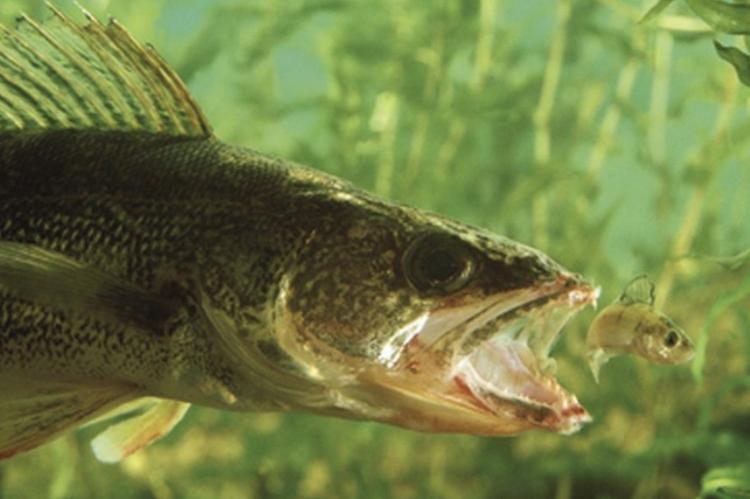
Fishing, the practice of catching fish, dates back at least 40,000 years, originally fisherman caught fish in order to survive, Growing up in northeastern South Dakota, in Watertown, we were just one block away from the Big Sioux River and less than a mile from Lake Pelican, we didn’t have to go far to go fishing or angling.
My grandparents, Albert “Butch” and Mary Menkveld were excellent anglers and because of them, we were very fortunate to have someone to introduce us to the sport of fishing.
My grandpa Butch, loved to catch northern pike, so he introduced us to the Red & White Daredevil “Spoon” that was attached directly to the line, where you’d cast the bait out and then retrieve it slowly, giving off a flash and a vibration that pike couldn’t ignore.
Inexpensive crappie rigs where the rigs t we used for panfish and bullheads consisting of heavier line, two metal standoffs with snelled hooks attach to each standoff, a sinker attached to a snap at the bottom of the rig using worms for bait.
Now Days, there are thousands of baits out there, many of which are made specifically for certain species.
According to The History of Fishing Early web site, the oldest fish hook, made from shell, was found in East Timor, Czechoslovakia and estimated to have been used from16,000 and 23,000 years ago.
Different types of fishing methods started appearing in the Neolithic times, between 8,000 and 4,000 years ago.
Tribes used toxic plants to numb the fish and then gather the stunned fish from the water. Those living during the Bronze Age, in Punjab, eastern Pakistan, used some of the first bronze harpoons. Ancient Egyptians, who lived near the Nile, depended heavily on it for its fish. Methods of fishing used on the Nile, ancient Egyptians fished from small reed boats for Nile perch, catfish and eels, using woven nets, weir baskets, harpoons, and hook and line to catch the fish, with the first metal barbed fish hooks being used during the 12th dynasty.
All civilizations that lived near the water, developed some forms of fishing and relied on fish as a part of their diet to some extent.
Throughout history, fishers as they were known used numerous types of fishing equipment, including toxins, gill nets, harpoons, fish hooks made from bone, woven nets, weir baskets made from willow branches, fish traps, spears, tridents, spears tridents and Gill nets, which are still used today were used in ancient times.
In North America, aboriginal fishermen used cedar canoes and natural fiber nets, made with nettles or the inner bark of cedar. They’d attach stones to the bottom of the nets for weights with wood to the top, for floats. Allowing the net to hang straight up and down in the water.
These nets would be suspended either from shore or between two boats. Native fishers in the Pacific Northwest, Canada, and Alaska still commonly use gillnets for salmon and steelhead.
In the United States, Native Americans on the California coast used “gorge” hooks from around 5,500 to 1,000 BC.
These hooks were made from, small pieces of wood or bone, had both ends sharpened, bait placed in the middle that was tied to their line. When the fish took the bait the two sharp ends would stick in the fish, allowing them to bring the fish in.
Fishing is still today popular as a sport and as a part of economy of some countries. Studies indicate that the total number of fishermen and fish farmers in the world is somewhere around 38 million.
Fishing or angling is passed along from one generation to the next and now, fishing has become somewhat easier with the production of sonar, fish finders/locators that not only show what’s below the boat, but also off to the side.
The units, along with the numerous baits, reel and rods give the fisherman all he needs to catch fish, but it’s still not all that easy as it’s a game between the fisherman and the fish, a contest where the fisherman using the correct bait, “color, vibration and flavor”, in the right location, at the right depth need to convince the fish to take the bait.
No, it’s not a slam dunk, but if you spend enough time on the water, you’ll become a modern-day angler and able to bring home a few fish for dinner.