

A GLIMPSE INTO MODERN HOMESTEADING
A GLIMPSE INTO MODERN HOMESTEADING
TINY ACRES HOMESTEAD:
Alyssa Mathis News@hcinet.net
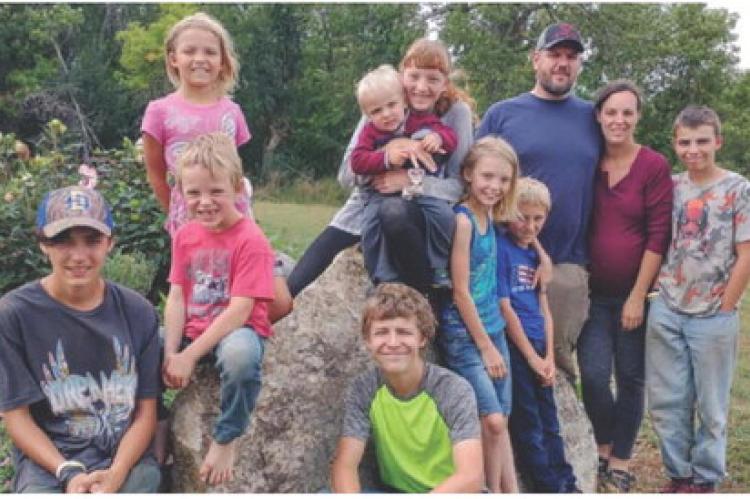
When someone thinks of homesteading, they visualize a simpler time with no technology, traveling using horses and wagons and living off the land. Homesteading originated from the Homestead Act of 1862, when the government enticed people to move west by giving them the right to claim 162 acres of land. Homesteading once again became mainstream in the 1990s as the go green movement gained momentum interweaving with homesteading to create a new type of homesteading with a goal of self-sufficiency, resourcefulness and eating less processed foods. Who would have thought that homesteading would once again be a lifestyle trend. In our area, nestled six miles directly north of the Avon City limits on 406th Avenue is one version of a modern homestead, Tiny Acres Homestead. Tiny Acres Homestead is owned and operated by Dan and Krystal Leverette. The name was officially coined by Krystal in 2018 while she was living in West Virginia. She had about a half of an acre of land, eight children and was raising rabbits, chickens and mini goats. When she moved to Avon in the summer of 2020, Krystal still felt that the homestead name was fitting for the family and farm. When asked what homesteading means to her, Krystal said that it is a way of life. She grew up in a family that grew their own food, used wood for heat and got their water from natural springs, so it was a natural transition for her to continue a modern version of homesteading. Krystal had tried living in town, but did not enjoy it as living in the country is in her blood. One of the biggest challenges of homesteading is starting out from scratch and the initial investment. One of her first investments was buying a small flock of 3 unregistered Icelandic sheep in 2021. As the flock grew, so did the need for a stock trailer, better fencing and investing in registered Icelandic sheep. Krystal chose Icelandic sheep because they are one of the oldest and purest sheep breeds. These sheep offer a delicate, mild, gourmet quality of meat as well as their fleece is popular with hand-spinners and crafters. Icelandic sheep’s milk is great for yogurt, cheese-making and soap. The sheep are 100% grass fed, never receive any chemicals, do rotational grazing and are given natural supplements to maintain their health. An interesting aspect of the family’s shepherding is that they are one of eight farms that works together to transport sheep from different parts of the Midwest, making it a more cost-effective process. Dan and Krystal have gone to Iowa, Illinois, Wisconsin and North Dakota to gather their current flock of 27 sheep. Krystal has been very realistic in her homesteading in that she works within her means; making it so that the families’ modern homesteading has started out slower than she and Dan had hoped. It has been a slow and steady process for the family as they buy different animals here and there. The ultimate goal is to increase the size of their flock and to buy a dairy cow that can provide milk. Part of the way that Krystal sees homesteading is that she does not expect Tiny Acres Homestead to ever be self-sufficient; however, her goal is to be less dependent on grocery stores for food and to know where her food is coming from. One of the biggest joys that has come from homesteading has been growing enough of their own food that they are able to walk past many of the grocery aisles without needing anything. The family even mills their own grain to make their own flour, as they bake and cook from scratch. The produce and animals that the family currently focuses on are Icelandic sheep, winter squash (because of its sweeter taste), watermelon and chickens for eggs. One of the biggest surprises that Krystal has experienced on her homesteading journey was finding that in some ways living more off the land makes things easier and simplifies life, but in some ways, it can also really complicate it. Especially when it comes to natural disasters such as drought or having to experiment summer after summer with trying to grow a garden and fruit trees in a soil that does not always cooperate. As with most things in life, practice makes perfect and the family has finally come up with an organic way to get plants to grow on the property. It is a hope in the future that the homestead can add a large building to house all of the different hobbies that the kids have taken interest in such as fixing cars, creating chainsaw art, welding, blacksmithing, wire wrapping, painting, building furniture, wallets, etc. They also hope to add more to their acreage, up the number of sheep in their flock, process their own wool and tan hides to name just a few. Until then, the family will happily continue their homesteading journey sharing their talents and goods with others at local farmer’s markets during the summer.