
CHARLES-MIX COUNTY LAKE RESTORATION PROJECT
CHARLES-MIX COUNTY LAKE RESTORATION PROJECT
Alyssa Mathis
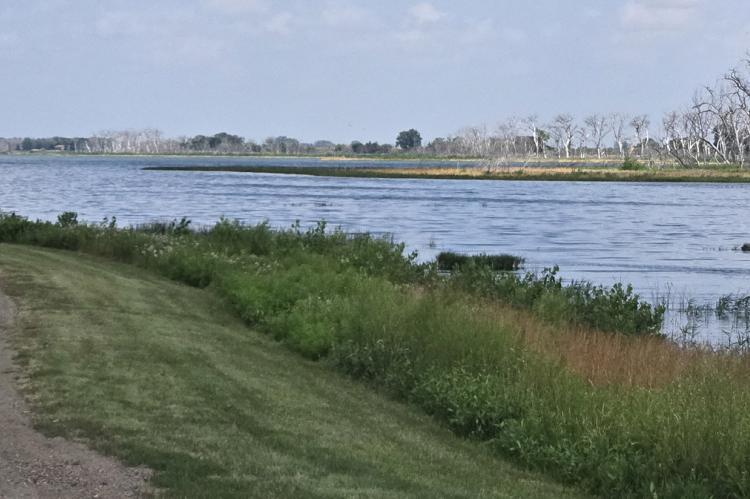
In October of 1990 through May 1992, a study which was initiated by local request was conducted on Charles-Mix County Lake. The purpose of this study was to determine the water quality problems, identify pollution sources and develop lake specific restoration alternatives. One of the key components of the water quality of Lake Andes is stagnant water. The study results showed that the lake was found to have very high concentrations of nitrogen and phosphorus, creating a hypereutrophic lake. Having these nutrients in such high concentrations can cause algae blooms, summer kill and winterkill events and plays a role in other nutrients and elements exceeding the state regulatory standards. Algae blooms can become a problem when they grow out of control and produce toxic or harmful effects on fish, birds, etc. Summer kill happens with warm water and long hours of daylight maximize the growth conditions for photosynthesis of algae; winter kill is when the oxygen levels get too low causing fish to perish.
Conclusions from the study were that the lake’s watershed was too small in relation to the lake size, which does not provide adequate water during drought years. This is important as the lake goes through a drought cycle about every 11-13 years. Another conclusion was that the nutrient levels in the lake are a major cause to the continual decline in the lake’s water quality.
Finally, the shallowness of the lake encourages macrophyte growth (plant life growth) which can cause problems creating a need for aquatic weed control.
The study presented four restoration solutions for the Charles-Mix County Lake. The first would be no action done whatsoever on the lake. This would lead to bullhead and carp species dominating the lake. It would also potentially lead to the area becoming more of a wetland instead of a lake following drought years. The second alternative presented was selective dredging. This would normally require a sediment survey to be completed prior to dredging that way a rate of sedimentation can be determined. The third alternative presented from the study was the land-based removal of the sediment. This is accomplished with the use of conventional equipment such as draglines, bulldozers or scrapers. The dry sentiment then can be transported and disposed of immediately. This alternative also includes creating rock piles, ditches and walls constructed for fish habitats. The fourth and final suggested alternative would be dilution/flushing. In this alternative, nutrient concentrations are lowered in order to flush out the algal cells with sufficient dilution waters pumped from Lake Francis Case.
It was recommended that the Conservation District, SCS, Extension Service, and DENR conduct small group meetings with farmers to address what to do with crop residue, grassed waterways, nutrient application, pesticides, ag handing, etc. and completely develop these plans. Work with the extension service and county weed supervisor to educate on the proper use and safety needed with pesticide. There needs to be a follow-up program put in place to assist the landowners and operators in applying the conservation practices.
What does all the above information really pertain to one may ask. In this case, the above information not only gives the reason that the Charles-Mix County Lake Restoration Organization was formed, but also shows why the organization is important for the future of the lake. The Charles-Mix County Lake Restoration organization was originally created in 1991. Then the organization stopped meetings until around 1999. In 2006, the lake restoration project was reorganized. Current members of the Charles-Mix County Lake Restoration Organization are Tim Whalen, Merritt Stegmeier, Craig Parkhurst, Dawn Schulte, Alex Petrik, Jeff Stewart and Bev Steinmark.
In order to raise funds to start the process of working on the lake restoration, the organization used to hold an annual fundraiser in the form of an informational dinner. The dinner would include a social hour, a swiss steak dinner and an informational program about the lake restoration project. Several years ago, the organization decided to hold a different annual fundraiser and decided to start RibFest. In 2023, the second year of the event, there were 18 entries and they were able to raise $8,000 which was double what the swiss steak dinners would raise. This year’s event had 19 contestants and grossed $16,000 with some expenses still needing to be paid. Smithfield graciously donated all of the racks of ribs for the event. Squares are still available for the electric bike raffle portion of the fundraiser. If still interested in purchasing a square stop into Tim Whalen’s office on Main Street.
Recent developments to the project include the road work that was completed on the north end of the street across from the lake where the road was formed, leveled and a new culvert put in. The next part of the restoration process was slated to start this summer, but due to logistics and all of the rain that the area received, the project was delayed. The organization hopes to begin the next stage of the project by this fall after the water has had a chance to recede with the building of the foundation and basic outline of the dike.
Rob Gray of Gray Wolf Construction has been generously donating his time and helping with the project. Rob donating his time and expertise has really helped the restoration organization save a lot of money.
Stay tuned for more updates on the Charles-Mix County Lake Restoration project.