CEO OF LARGE S.D. NON-PROFIT AGENCY REMAINS IN HIS JOB DESPITE FEDERAL SEXUAL HARASSMENT SETTLEMENT
The director of one of the largest non-profit social service agencies in South Dakota was the subject of a recent federal sexual harassment investigation that resulted in a $320,000 payment to several former female employees.
A two-year investigation by the U.S. Equal Employment Opportunity Commission found that the male director of the Rural Office of Community Services, based in Wagner, S.D., sexually harassed female employees for years and that some victims of the harassment were fired when they complained.
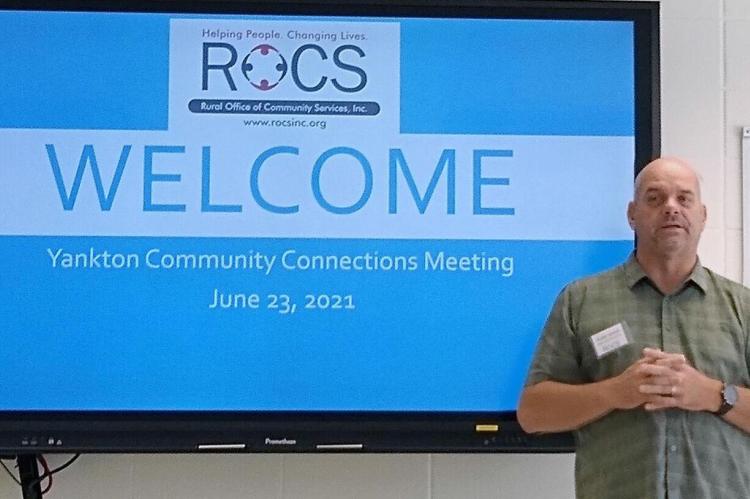
According to EEOC officials and reporting by South Dakota News Watch and the True Dakotan newspaper, Peter Smith, CEO of ROCS, sexually harassed several female employees at the private non-profit agency that provides housing, food and transportation assistance to low-income residents in 22 southeastern South Dakota counties.
News Watch reporting shows that despite the alleged violations of federal Title VII of the Civil Rights Act of 1964, which prohibits discrimination on the basis of gender and prohibits retaliation by employers, Smith remains in his position as head of the agency. A ROCS employee told News Watch on Jan. 12 that Smith was unavailable for a phone call because he was at training sessions in Pierre.
In his current role, Smith oversees all operations of ROCS and manages a main office staff of 33, including 23 women, which serves low-income individuals and families from a wide swath of South Dakota roughly from Chamberlain to Mitchell to Yankton.
In a December 2022 announcement of the $320,000 settlement, the EEOC reported that the payment resolves a charge alleging that “Rural Office of Community Services, Inc. discriminated against employees because of their sex by subjecting them to sexual harassment and retaliated against certain employees who complained by terminating them. The EEOC found that the female employees were harassed by executive director. Despite complaints to management and the board of directors, the EEOC found the harassment continued over several years.”
In an on-the-record interview with the True Dakotan, one of the former employees who received EEOC settlement funds said Smith directed sexual innuendos toward female employees and commented on their breasts; that he hugged and touched female employees in a way that made them uncomfortable; and that he once pretended to have had a sexual encounter with the employee whom he had hugged in an office at an agency Christmas party.
That former employee, Becky Sieh, said she felt a pit of worry in her stomach each time Smith arrived at the office, and that after the unsettling holiday party incident, she made a point never to be alone with Smith again.
One other female former ROCS employees who was part of the EEOC settlement shared similar stories about Smith’s behavior with the True Dakotan, but was unwilling to have her name used because she feared retaliation by Smith.
The former employees, who either quit or were fired from ROCS, said Smith also created a toxic workplace culture of intimidation, bullying, retaliation and favoritism that detracted from the ability of the agency to help clients. The former employees further noted that when they complained to members of the ROCS Board of Directors, their complaints were ignored or rejected as unreliable and that the 12-member board did not prevent their terminations or disciplinary actions against them.
Smith did not respond to phone messages and an email from News Watch seeking comment, and several board members also did not respond to phone messages. Reached by phone, ROCS Board Member Dallas Laffey told a reporter: “You’re only hearing from one side; I’m not going to say any more,” before hanging up.
The attorney representing ROCS, Richard J. Rylance of the firm MorganTheeler in Mitchell, sent News Watch a statement saying that ROCS fully cooperated with the EEOC review and has since completed additional training for its entire staff and board. ROCS has enhanced its internal processes and protocols as well, the statement said.
“ROCS is committed to a workplace environment which is respectful, welcoming and safe for all of our employees,” the statement said.
Cherie Doak, director of the Minneapolis office of the EEOC, oversaw the investigation into the complaints by ROCS employees.
Doak said confidentiality rules prevent her from discussing specifics of the complaints, the investigation or the settlement agreement. News Watch has filed a federal Freedom of Information Act request with the EEOC office in Washington, D.C., to obtain those records, but the documents had not been released as of Jan. 17.
Doak told a News Watch reporter that her understanding was that Peter Smith had been removed from his position as CEO of ROCS, and was surprised to hear that Smith remains in charge of the agency.
“That is news to me; very inter-esting,” Doak said.
Doak said EEOC generally does not have the authority to require an employer to fire an employee who has broken federal workplace discrimination laws. However, she added: “Had he been an employee of mine, he would not still be in his position, let me just say that.”
Doak said the initial complaint was filed with the EEOC in October 2019 and that the investigation and settlement were concluded in late spring of 2022. Doak said the ROCS board complied with EEOC investigators and appeared to take the claims and settlement requirements seriously.
Doak said the ROCS board and staff are now subject to a five-year monitoring program by EEOC to ensure that sexual harassment or other illegal behaviors are not repeated, and that policy and procedure changes mandated as part of the settlement are enacted. EEOC investigators can visit ROCS, interview employees or review documents to ensure future compliance, Doak said.
Doak said EEOC investigators worked closely with the ROCS complainants before determining that violations of federal employment laws had taken place. The EEOC then spoke with the victims to develop potential settlement payments, which typically include back pay and lost wages but can include other compensatory payments.
It is unclear where the $320,000 paid to victims came from within the agency’s budget, which mostly is supported by government funding. According to a September 2021 audit of ROCS, the agency received $8.3 million in public support that fiscal year, mainly from federal human services and other agencies. ROCS spent $8.1 million that year and had $377,000 in cash reserves.
After working at ROCS in 2019, former employee Tammy Rueb filed a claim with the EEOC alleging that she was sexually harassed at ROCS and was terminated after reporting the harassment, according to a letter sent to the True Dakotan by her lawyer, Creighton A. Thurman of Yankton.
“Ms. Rueb was subjected to repeated harassment of a sexual nature that made her extremely uncomfortable. Such inappropriate actions created a great deal of stress and anxiety for Ms. Rueb,” Thurman wrote. “Prior to Ms. Rueb’s subsequent termination from her employment, Ms. Rueb made the human resources department aware of the discrimination, as well as the board of the corporation, to no avail. The reporting of the aforesaid harassment led to her termination from employment.”
Thurman said the EEOC investigated and found reasonable cause to believe that discrimination and retaliation took place. “During the course of the EEOC’s investigation into Ms. Rueb’s complaints, they apparently found other employees that were subjected to harassment,” Thurman wrote.
In his letter to the True Dakotan, Thurman said he and his client are unsure whether the harassment of ROCS employees has ended, even after the EEOC settlement.
“Unfortunately, even though the situation is being monitored by the EEOC, we are uncertain that the harassment that Ms. Rueb was subjected to has ceased,” he wrote.
An environment of ‘fear and intimidation’ Over the course of nearly 13 years with ROCS, Becky Sieh ran a variety of programs in Charles Mix and Gregory counties as an outreach service provider.
Sieh notes that immediately following Smith’s hiring, the work culture at ROCS changed drastically.
“Peter’s style was to yell up and down the hallways,” Sieh said. “The environment changed to one of fear and intimidation.”
Despite his unsettling behavior, at that point Sieh said she gave Smith the benefit of the doubt and was hopeful that he might catapult ROCS forward, allowing the organization to expand programs and serve more South Dakotans.
“Although his behavior led me to think there was something amiss, I thought, let’s see what he will do with the agency,” Sieh recalled.
Sieh points to the summer of 2019 as the first time she heard of sexual harassment accusations against Smith, during an all-staff meeting and conference call informing employees that the board had received a sexual harassment complaint.
In 2020, Sieh was approached