

HUNTING - IT'S WHY WE HAVE WILDLIFE
HUNTING - IT'S WHY WE HAVE WILDLIFE
Roger Wiltz Hunting/fishing Enthusiast
Rog's Rod & Nimrod
Back in 2014, just after returning from a hunting-fishing trip in the Caprivi Strip area of Namibia Africa, I predicted that Botswana would one day reopen the sport hunting of big game on public lands that it had shut down. In traveling down the Chobe River that bordered Botswana on the north, it was readily apparent to me that the existing forage had already been ravaged by the starving elephants that far outnumbered the habitat’s ability to support them.
The obvious consequences of Botswana’s ban on hunting was starving elephants and the poaching for ivory that skyrocketed. Without the revenue from hunting licenses, there was no funding for law enforcement or conservation efforts. On May 22nd of 2019, Botswana announced that it would rescind the hunting ban. The rescinding didn’t come from hunting interests. It came directly from the predominately poor people who live in the bush.
Why did the people speak? It began with a series of public meetings – probably somewhat similar to the proposal meetings hosted by our own SD Game, Fish, & Parks. However, the bush folks weren’t at all accustomed to the government asking them for an opinion.
The number of concerns were numerous although any one could have been grounds in itself. Human-wildlife conflicts were steadily rising. This included the loss of human lives as well as livestock. There was a decline in the hunting related jobs that affected their livelihood. Community-based organizations that funded health services as well as schools no longer had the revenue that came from hunting. The local people also missed the meat that was supplied by the hunters – meat that was now rotting out in the bush.
During our stay in a tent camp on the Chobe River, two local black women were employed. They did the cooking, housekeeping, and laundry. Other than the white professional hunter that guided my partner, Doug, on his cape buffalo hunt, three local black men accompanied the hunters in various capacities. Partner Jim Paulson and I also needed a fishing guide. Numerous other hunting-related jobs were lost in taxidermy as well as transportation.
The greatest wildlife populations in the world are there because of managed hunting. Our own USA, Canada, Russia, Pakistan, Europe, New Zealand, and Argentina come to mind. Without the revenue generated by hunting, there would be no wildlife. As they say in Africa, “If it pays, it stays.”
* * * * * * *
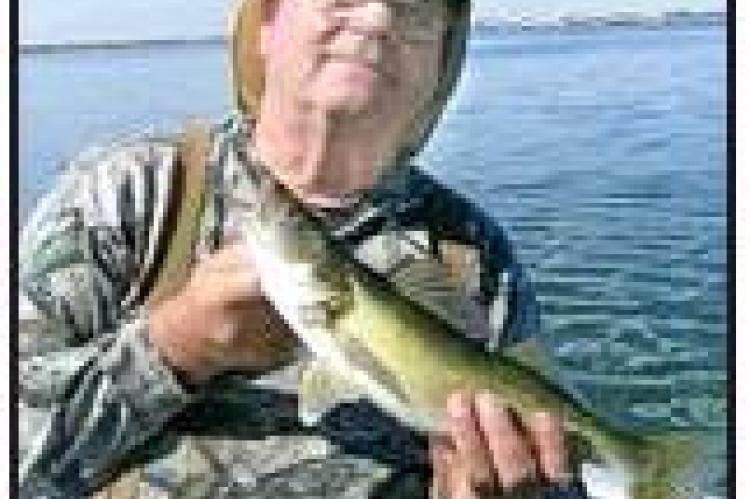
I had an interesting experience a few weeks ago. We were slip-bobber fishing from a boat with pieces of night crawler for bait. My two rigs included snelled hooks (monofilament leaders) attached to snap swivels. The action wasn’t fast, but it was good enough to hold our attention. We were catching bluegills and smallmouth bass with an occasional drum or white bass thrown in.
One of my bobbers hadn’t moved for a half hour, and I pulled it in to check my bait. Not only was my bait gone, but so was my snelled hook! I had apparently forgotten to close the snap swivel when I put my rig together. It appeared that some fish had grabbed the bait and swam upward in such a manner that the loop rose out of the swivel without moving the bobber! What were the chances of that happening, and what kind of fish could do that?
It gets better! An hour later the same bobber went under and I pulled in a smallmouth bass that had the leader end of my previously lost snelled hook protruding from its jaws. The hook was buried deep in its gullet. If fish can feel pain, the swallowed hook didn’t bother the fish enough to deter it from biting again.
A similar encounter. Years ago the late Bob Wiechmann and I were jigging for walleyes in Saskatchewan’s Lake Besnard. Bob had his jig sheared off by what we assumed was a northern pike. An hour later Bob hooked and landed a walleye that had his lost jig inside its mouth. Again that hook didn’t bother that walleye enough to discourage it from hitting again. We learned right then that walleyes as well as northern pike have sharp enough teeth to shear fish line with ease.
I’m thinking about writing another book that will feature a story about the late Mitchell, SD doctor, William Delaney. I’m told he rarely missed with a shotgun. I’d appreciate it if anyone who hunted with the man would get in touch with me.
See you next week.