

HIGH TECH COPPER BULLETS-THE ONLY WAY TO HUNT
HIGH TECH COPPER BULLETS-THE ONLY WAY TO HUNT
Rog's Rod & Nimrod By Roger Wiltz Hunting/fishing Enthusiast
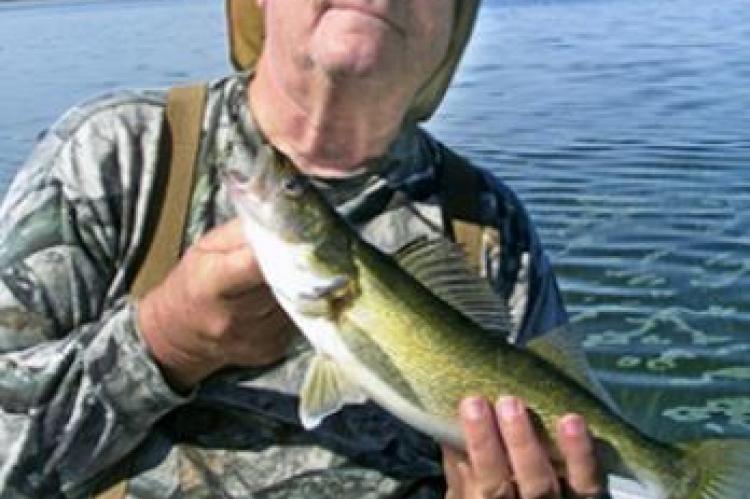
I rarely give hunting advice, and you know that I’m not a high tech guy when it comes to hunting or fishing. I don’t own a range finder or a computerized rifle scope, and I don’t use trail cameras or ozone scent machines. My boat’s depth finder cost less than a hundred dollars, and my electric trolling motor is manually operated. I think you would label me as being “old school.”
However, there’s one fairly recent development that I wouldn’t go without, and that is today’s 100% copper bullets by Barnes. Up until the copper bullet, most hunting bullets had a lead core surrounded by a copper jacket that at times yielded sub-par performance on big game.
The following account sounds boastful, but I am not that great a shot. My success can be attributed to a tripod as well as being very selective about the shots I take. I’m touting bullet performance, not my marksmanship. In recent years all of the big game animals I’ve killed with the exception of a sloppy shot on a blue wildebeest were dropped in their tracks with one shot using Barnes .30-06 ammunition featuring 180 grain TSX bullets of 100% copper.
The tally includes seven whitetail bucks, a muley buck, two Wyoming elk, a British Columbia moose, two stags and a fallow deer from Argentina, and three springbok and a gemsbok from Africa. The gemsbok is arguably the toughest African antelope to put down in one shot. Of the bullets I’ve recovered, all have peeled back like a banana while retaining 100% of their original 180 grain weight. This gives them twice their original diameter with excellent penetration. Most important – the bullet is humane.
To solidify my case for the all copper Barnes TSX bullet, I wish to quote the late Jack O’Connor. The quote is taken from the book Classic O’Connor – 45 Worldwide Hunting Adventures.
“I have never made a poorly placed shot on a moose, and I have never seen a moose killed with a .270 in one shot, but on the other hand I have never seen a moose killed with one shot with any caliber – 300 Magnum, .30-06, .300 Weatherby, .375. A moose is a large, dumb animal, and he apparently has to think about it for a while before he realizes he is dead.”
So in all of the many moose kills O’Connor has witnessed, he never witnessed a one-shot kill…..even with the heavy hitting magnum calibers. In British Columbia during the fall of 2016, I dropped a large-bodied bull moose with a single shot from my .30-06 using the afore-mentioned ammunition. He collapsed. He never heard the shot. Did I pull off a miracle shot? I’ll grant you that it was a well-placed shot, but with today’s bullets, it was nothing out of the ordinary. Barnes TSX bullets are a bit pricey, but with all hunting expenses considered, a humane kill is well worth the additional expense.
Speaking of advances in the world of hunting, I received a letter from Ken Haugen of Mitchell. Back in 1972, Ken says that he was instrumental in getting the compound bow legalized in South Dakota. At the time SD law said “No mechanical bows.” Ken wished to tell me about another archery innovation that might be huge. It is called the Fletching Only Better (FOB) arrow fletching.
It is a round arrow stabilizer device, apparently of plastic, that slips over the arrow shaft after the conventional feather or plastic fletchings have been removed. It supposedly provides better arrow stabilization while reducing crosswind effect. This should improve overall accuracy. Go to fobarchery.com for a closer look.
For the coming 2020 SD West River Deer season, deer from Bennett, Butte, Corson, Custer, Fall River, Haakon, Harding, Jackson, Meade, Lawrence, Pennington, and Tripp Counties must be tested for Chronic Waste Disease. This testing will be costly to our Game, Fish, & Parks Department, and it will inconvenience the affected deer hunters.
I’d like to see a field test kit for hunters…..hopefully a test that could yield immediate results. In 2018, the Wyoming Game & Fish people included a vial for collecting a blood sample with my elk tag. I was to send it in. Couldn’t SDGF&P go with a similar vial for brain matter? It might come down to drilling a small hole and extracting a sample. Perhaps something like a litmus test could be developed to detect positive or negative results. This might lead to a more effective treatment of the kill site. Call me a dreamer, but something must be done…..and soon.
See you next week.